© Shutterstock/ Temitiman
The SafeJournalists Network (SJN), the undersigned partners of the Media Freedom Rapid Response (MFRR) platform, and Reporters Without Borders (RSF) welcome the ruling by the Constitutional Court of Albania, which found that the Council of Ministers Decision No. 151 of 6 March 2025, suspending nationwide access to the social media platform TikTok for one year, constituted a violation of freedom of expression and freedom of the press, as protected under Article 22 of the Constitution of Albania and Article 10 of the European Convention on Human Rights (ECHR). The case was brought before the Court by the Association of Journalists of Albania and BIRN Albania .
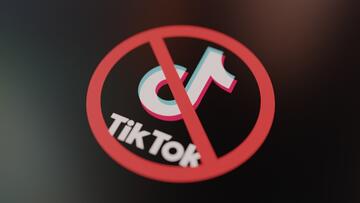
The measure was introduced in March 2025, when the Albanian government ordered a one-year nationwide suspension of TikTok, citing concerns about the platform’s impact on youth safety and violence following the fatal stabbing of a 14-year-old in late 2024.
The Constitutional Court examined the measure under the three-part test set out in Article 17 of the Constitution, which determines when restrictions on fundamental rights are permitted. Under this framework, the Court assessed whether the restriction had a clear legal basis, pursued a legitimate public interest, and was proportionate.
On legality, the Court found that the laws cited by the government did not provide a clear and specific legal authorisation for a measure of this scope — namely, the suspension of access to an entire online platform for all users in Albania. As a result, the Court concluded that the requirement that restrictions be “prescribed by law” was not met.
On legitimate aim, the Court accepted that the protection of children from harmful online content constitutes a legitimate public interest capable of justifying certain restrictions on freedom of expression.
However, the Court found that the measure failed the proportionality test. It determined that the government had not sufficiently demonstrated that less restrictive alternatives had been considered, nor that a nationwide platform ban was necessary to achieve the stated objective. The Court also noted that the measure’s temporary nature did not render it proportionate, as the ban took the form of a general restriction affecting all users.
Although the contested decision had already been repealed by Council of Ministers Decision No. 62/2026 , the Court proceeded to rule on the case in the public interest and declared that the implementation of Decision No. 151/2025 had violated freedom of expression and freedom of the press. A fully reasoned judgment will be issued in accordance with the legal deadlines.
This ruling confirms concerns raised from the outset by media freedom organisations and civil society actors that the nationwide TikTok ban — introduced without parliamentary scrutiny, prior public consultation, or a demonstrated proportionality assessment — was incompatible with constitutional standards and international human rights obligations.
The decision establishes an important constitutional principle: measures restricting access to digital platforms must have a clear and specific legal basis, be demonstrably necessary, and represent the least restrictive means available to achieve a legitimate public-interest objective.
The ruling also has broader relevance for ongoing discussions on the regulation of digital platforms. As governments across Europe and the Western Balkans explore ways to address online harms, the decision provides an important reminder that such measures must be grounded in clear legal authority and respect the principles of necessity and proportionality, in line with constitutional and international standards on freedom of expression.
We reiterate our call on the Albanian authorities to initiate an inclusive and transparent consultation process involving parliament, civil society, media organisations, digital rights experts, international partners, and other relevant stakeholders to develop a proportionate and evidence-based approach to digital platform regulation.
Such efforts should be aligned with European standards, in particular the EU Digital Services Act (DSA), which provides a risk-based framework for addressing systemic risks and harmful content online. Recent enforcement actions under the DSA, including the European Commission’s preliminary findings regarding TikTok’s potentially addictive design , demonstrate that platform-related risks can be addressed through regulatory oversight and accountability mechanisms without resorting to broad restrictions on access to digital platforms. This approach would enable Albania to effectively address legitimate concerns about child safety and data protection while safeguarding freedom of expression, democratic discourse, and due process.
Today’s ruling underscores the importance of ensuring that any future measures affecting digital platforms are grounded in clear law, demonstrably necessary and proportionate, and subject to meaningful democratic and judicial oversight.
Signatories
SafeJournalists Network
Association of BH journalists
Association of Journalists of Kosovo
Association of Macedonian Journalists
Croatian Journalists’ Association
Independent Journalists’ Association of Serbia
Trade Union of Media of Montenegro
Reporters Without Borders (RSF)
Media Freedom Rapid Response(MFRR)
Osservatorio Balcani Caucaso Transeuropa (OBCT)
European Centre for Press and Media Freedom (ECPMF)
International Press Institute (IPI)
European Federation of Journalists (EFJ)
Free Press Unlimited (FPU)
Tags: Albania media freedom Freedom of expression
This content is part of the Media Freedom Rapid Response (MFRR), a Europe-wide mechanism which tracks, monitors and responds to violations of press and media freedom in EU Member States and Candidate Countries. The project is co-funded by the European Commission.

