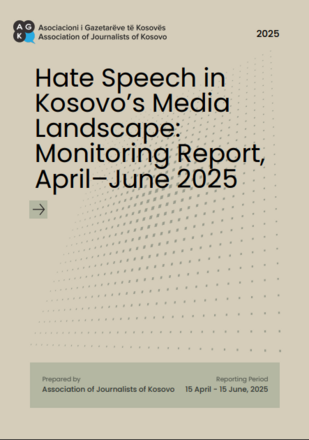
The report analyzed media in Albanian (KTV, T7, Dukagjini, Klan Kosova, RTK, ATV, RTV21) and Serbian language media (Kosovo Online, TV Most, and RTV Gračanica). Monitoring was conducted weekly, focusing on prime-time debate shows, news bulletins, and political talk shows, selected for their reach, influence, and representation of Kosovo’s linguistic diversity. The analysis used Babak Bahador’s hate speech categories (e.g., disagreement, dehumanization, exclusion, demonization) and was complemented by the UN Rabat Plan of Action, which assesses hate speech through context, speaker, intent, content, extent, and potential harm.
Kosovo has established key bodies to address hate speech and to foster respect for human rights within its media and public discourse. The Ombudsperson Institution (OIK) represents the key institution, followed by the Independent Media Commission (IMC), the Press Council of Kosovo (PCK), the Language Commissioner, and the Office for Good Governance (OGG). Together, these institutions create a multi-layered system addressing hate speech through law enforcement, media regulation, ethical oversight, language rights protection, and policy coordination, with effective cooperation being essential for an inclusive and respectful media environment in Kosovo.
The comparative analysis revealed distinct patterns in the use and framing of hate speech. In Albanian-language prime-time debate shows (Rubikon, Pressing, Debat Plus), hate speech was generally rare, but some problematic ethnic generalizations and politically charged language still appeared, especially when discussing “Serbia” or “Lista Srpska”. Political discourse in Albanian-language public and private broadcasters shifted from disagreement toward exclusionary and sometimes dehumanizing rhetoric, often portraying non-majority communities (especially Bosniaks and Serbs) as obstructive or burdensome.
In comparison, monitored Serbian-language outlets showed no explicit hate speech was found, but accusatory and emotionally charged rhetoric—often uncritically republished from political actors—frequently portrayed Kosovo institutions and Albanians in hostile terms, reinforcing victimhood narratives and ethnic divisions. Independent media such as KoSSev, Radio Goraždevac, Radio KiM, Kontakt Plus, and Media Center Čaglavica stood out for balanced, ethical reporting and efforts to support dialogue, despite limited resources and growing public trust. Independent Serbian-language media demonstrate that constructive discourse is possible even in a sensitive context, with some programs promoting balanced reporting, empathy, and critical thinking, especially among younger audiences, and contributing to reconciliation and social cohesion.
Key recommendations:
- Develop a national hate speech strategy aligned with UN frameworks;
- Strengthen media and civic education on hate speech prevention and media literacy;
- Promote ethical communication and accountability among political and religious leaders;
- Strengthen enforcement roles of media regulators and self-regulatory bodies;
- Establish independent monitoring and early warning systems for hate speech;
- Support inclusive media content and interethnic dialogue programs;
- Apply international standards such as the UN Rabat Plan of Action;
- Engage the Ombudsperson Institution in monitoring and addressing hate speech.
The content of this article can be used according to the terms of Creative Commons: Attribution-NonCommercial 4.0 International (CC BY-NC 4.0) . To do so use the the wording "this article was originally published on the Resource Centre on Media Freedom in Europe" including a direct active link to the original article page.
