
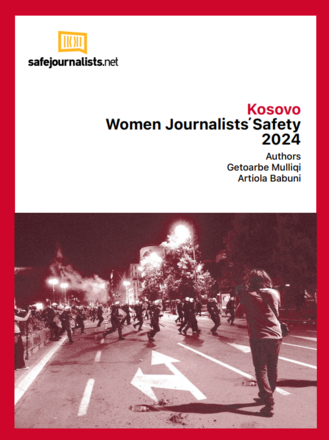
Despite Kosovo’s legal framework that guarantees gender equality, women’s safety, and freedom of expression, women journalists face severe and disproportionate risks. The forms of violence vary and include gender-based violence and discrimination, including online harassment, intimidation, verbal abuse, SLAPPs, exclusion from editorial decision-making, and in some cases, physical threats or attacks. The Independent Media Commission (IMC) plays a central role in regulating Kosovo’s media and can sanction gender discrimination and harmful content, but a lack of complaint data points to weak transparency and underreporting. Kosovo adopted key legal instruments such as the Law on Gender Equality and the Law on Anti- Discrimination, but their implementation within the media sector remains inconsistent and often insufficient to address the specific challenges faced by women journalists. Digital violence against women journalists has become a rising issue, as Kosovo’s Laws do not specifically recognize digital violence in general nor in the context of professional journalism.
Kosovo’s gender equality framework lacks specialized training, centralized reporting mechanisms, and systematic data collection on violence and discrimination against women journalists, limiting effective protection and accountability. Although anti-discrimination and labor laws formally guarantee equality and workplace safety, weak enforcement, informal employment, and the absence of institutional support leave women journalists in precarious conditions. Additionally, gaps in legal aid, media legislation, and protections against SLAPPs mean that women journalists face legal, professional, and safety risks with minimal institutional backing.
The main findings from the seven chapters are:
- Women journalists face frequent harassment and intimidation, especially online and when covering sensitive topics;
- Abuse is often gender-based and personalized, sometimes extending to family members;
- Sexual harassment and legal threats are common but underreported due to fear of consequences
- Institutional and newsroom support is weak.
- Internal pressure and safety concerns lead to self-censorship and restricted professional engagement.
In the final chapter, key recommendations are provided for public authorities, media outlets, journalists’ associations, Network of women journalists, and civil society organizations.
Tags: Kosovo Safety of journalistsThe content of this article can be used according to the terms of Creative Commons: Attribution-NonCommercial 4.0 International (CC BY-NC 4.0) . To do so use the the wording "this article was originally published on the Resource Centre on Media Freedom in Europe" including a direct active link to the original article page.
