
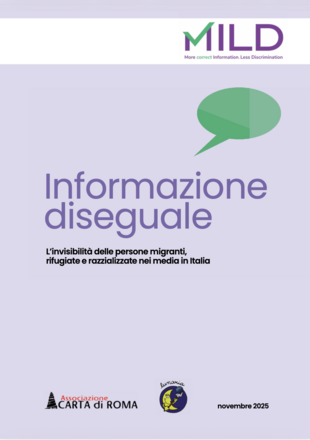
The report by Carta di Roma and Lunaria, based on 19 in-depth interviews with stakeholders from the media sector and civil society organizations combating racism, identifies a key challenge: the Italian media ecosystem is closely tied to political interests, which often shapes how migration and racialized individuals are represented. This results in information being filtered through a security lens, frequently portraying immigration as a battleground and using sensational language that delegitimizes immigrants and portrays the issue as a persistent crisis.
This dynamic exacerbates the challenges faced by migrant, refugee, and racialized people in entering the journalism profession in Italy. The report highlights specific barriers:
- Structural Barriers: A lack of policies facilitating access to the profession for those with a migrant background.
- Class Barriers: Economic (e.g., high education costs) and social obstacles, compounded by a job market still heavily reliant on social networks, making it difficult for underrepresented groups to break in.
To address these issues, the report proposes a multifaceted solution centered on narrative change, comprising three key elements:
- Structural: Reforming media sector policies and working conditions to be more inclusive and accessible.
- Cultural: Evolving language, thought patterns, and perceptions to better represent and value racialized individuals.
- Symbolic: Envisioning a more diverse society that moves beyond the notion of a "white and homogeneous identity."
To build a truly pluralistic information ecosystem where racialized and migrant background individuals are not just represented but are also active agents of change, the report emphasizes the need for public policies, educational investments, and a collective commitment from institutions and media.
Tags: Italy migrations Media pluralismThe content of this article can be used according to the terms of Creative Commons: Attribution-NonCommercial 4.0 International (CC BY-NC 4.0) . To do so use the the wording "this article was originally published on the Resource Centre on Media Freedom in Europe" including a direct active link to the original article page.
